











Description
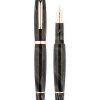
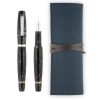
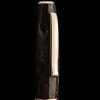
FEEL Nova Stella
The desire to discover what we do not yet know.
There is a moment, during navigation, when all familiar references disappear. The land is now far away, the sea extends beyond the gaze and even the sky begins to change. The stars that for centuries have indicated the route give way to others, never observed before.
It is the encounter with something that until then existed only in the imagination. An unknown horizon, capable of arousing wonder and, at the same time, the desire to go even further.
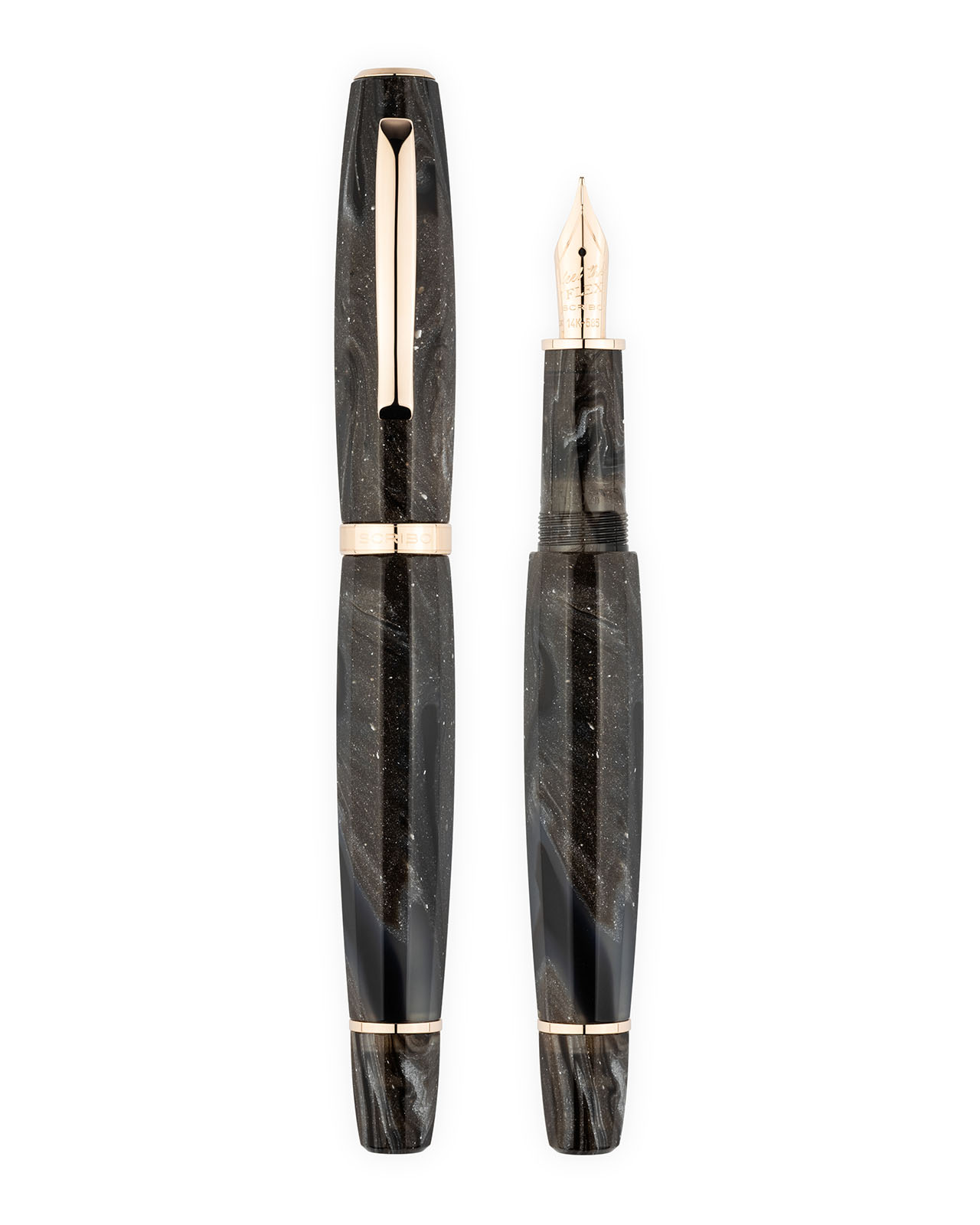
It is from this image that FEEL Nova Stella takes shape, a new interpretation of the FEEL collection, inspired by the last journey of Ulysses narrated by Dante in Canto XXVI of the Inferno.
Driven by an insatiable thirst for knowledge, Ulysses passes through the Pillars of Hercules, crossing the boundaries of the known world to venture into the immensity of the ocean. His route leads him to a different sky, where the stars of the northern hemisphere disappear below the horizon line, leaving room for those of the opposite pole, never before observed by sailors. It is one of the most evocative images of Dante’s story: an unknown sky that reveals itself to those who have had the desire to go beyond what they knew.
FEEL Nova Stella was born from this gaze turned to the unknown. Its name symbolically recalls those stars never seen before, which become an expression of the human desire to know, explore and overcome one’s own boundaries.
But Ulysses’ journey also holds a deeper meaning. In Dante, the search for knowledge coexists with the risk of going beyond human limits. The desire to discover new horizons is accompanied by the uncertainty of what awaits beyond the known, in a continuous tension between curiosity and awareness.
It is precisely this tension that makes discovery an experience capable of transforming us. Each new horizon changes our way of observing the world and invites us to question ourselves about what still remains to be known.
Writing also often takes shape from the desire to explore something whose form we do not yet know. A thought barely guessed, a question left unanswered, an idea that takes an unexpected direction.
In front of a blank page, words become a research tool: they allow us to go through what we imagine, to observe from different perspectives and to give shape to what, until a moment before, we did not yet know how to express.
Every word opens up a possibility. Every sentence can lead us to an unexpected reflection. And sometimes it is precisely by writing that we come to understand what we were looking for.
With FEEL Nova Stella, SCRIBO pays homage to this dimension of writing, to the pleasure of being surprised by your own’s ideas and to the curiosity that continues to fuel the desire to know.
The link with Dante’s story is also found in a distinctive detail of this edition: number 133.
In Canto XXVI of the Inferno, it is precisely in verse 133 that Ulysses recounts the appearance of an unknown mountain, seen in the distance after months of navigation. It is the moment when, beyond the sea and under a different sky, a never seen before land is outlined.
An image that containes the charm of overcoming the limit, but also the complexity of Dante’s story.
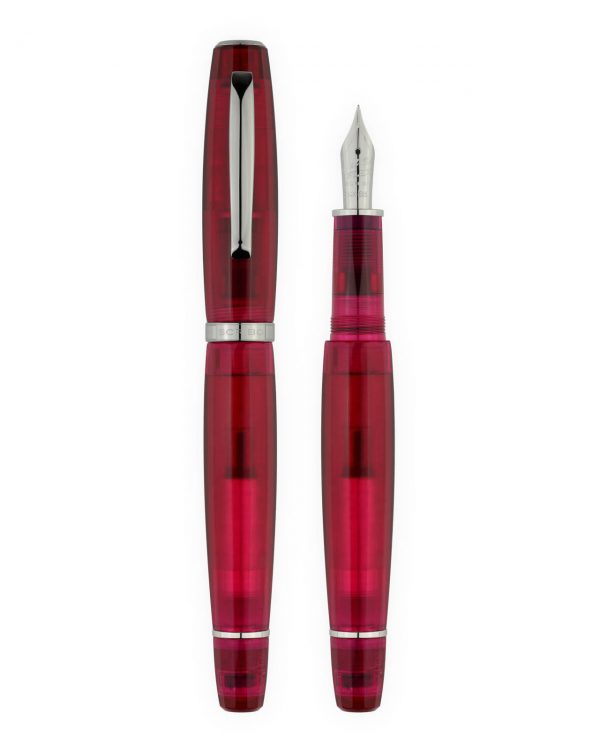
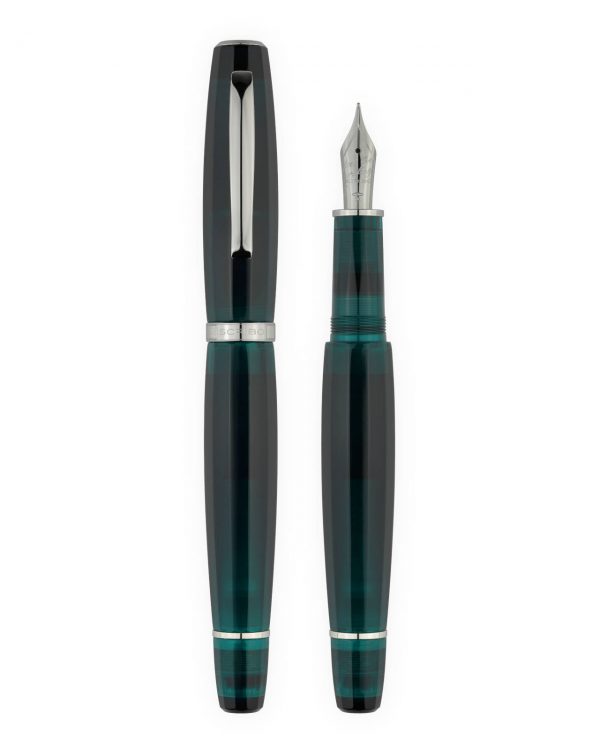
SCRIBO has chosen to preserve this reference by creating FEEL Nova Stella in two different finishes, each limited to 133 numbered copies, for a total of 266 fountain pens.
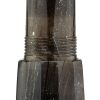
The number, also recalled by a dedicated engraving, thus becomes an integral part of the identity of the edition. A detail that binds each copy to the story from which it draws inspiration, transforming a precise literary reference into a distinctive element of the fountain pen.
FEEL Nova Stella celebrates the charm of what still remains to be known. That curiosity that leads us to question ourselves, to change perspective and to look for new meanings even in the most familiar experiences.
Because there are horizons that we can only reach with thought. And possibilities that take shape the moment we find the words to imagine them.
Each new word is a horizon to be discovered.
«Tutte le stelle già de l’altro polo
vedea la notte, e ‘l nostro tanto basso,
che non surgëa fuor del marin suolo.»
Dante Alighieri, Inferno, canto XXVI, vv. 127–129.