Description
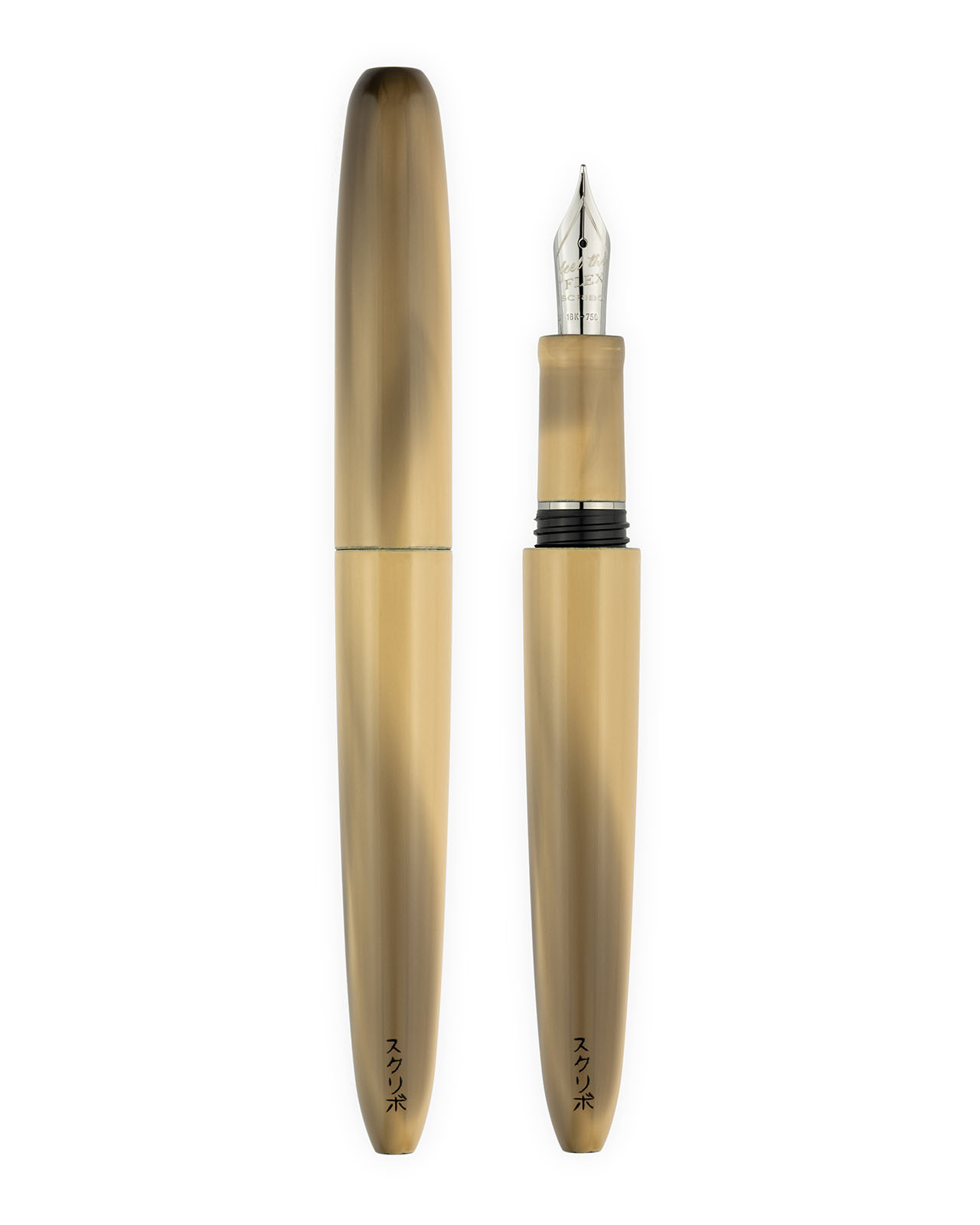
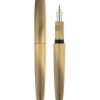
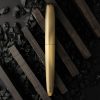
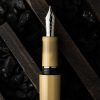
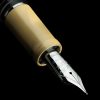
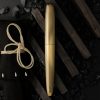
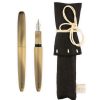
PIUMA Hane Murakumo
Between light and matter lies a subtle line, a point where what has been precisely defined begins to slip away, to shift, to become something else. It is in this uncertain zone that HANE Murakumo takes shape, where the gesture meets the unpredictable.
Murakumo, in Japanese, means “gathering clouds.” Not a fixed image, but an unfolding event. A slow thickening, a movement that cannot be held back. Like the sky when it changes without revealing its design. Like warm breath that alters what it touches.
HANE Murakumo is a frozen moment in time. It is a brushstroke and a gesture. And it is in the final gesture that Murakumo finds its voice.
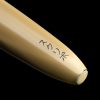
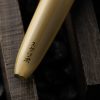
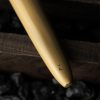
The freshly applied white lacquer is held over a dancing flame and decorated by the candle smoke as if it was ink. No two pieces are exactly alike; no movement is ever truly repeated in the same way. And the lacquer is left in its rawest state, drying to form a solid, durable surface, without being further treated with sandpaper or polishing powders.
The result is therefore left to time. No polishing intervenes to even out, erase, or to look for perfection. The surface remains alive, satin-finished, soft to the eye and touch, as if it still holds the memory of the brush that passed over it. Light does not bounce, it settles, glides, gathers.
It is a quiet beauty, one that does not impose itself but invites discovery, becoming a truly unique piece.
There is no possibility of subsequent intervention: what happens remains. For this reason, each phase takes place in perfectly pure and authentic environments, where even the smallest particle can leave a permanent mark.
Yet, precisely in this impossibility of correction, another concept of precision is revealed.
The slightest variations, the imperceptible ripples, the almost invisible signs that may emerge do not disrupt the object’s harmony: they bring it to life. They are traces of the process, memories of time, of heat, of air. Not flaws, but testimonies.
Murakumo does not seek uniformity. It preserves the moment.
In this sense, it resonates with a sensibility deeply rooted in Japanese culture: one that recognizes value in what changes, in what eludes a definitive shape, in what bears the mark of its own becoming.
Writing with HANE Murakumo means entering this dimension. Slowing down until you can feel the surface beneath your fingers, observing how the light changes as the pen moves, allowing the act of writing to rediscover a more mindful rhythm.
Every word traced on the paper seems to continue what the pen’s surface has already begun: a slow, unrepeatable, living movement.
It is not just a writing instrument. It is an invitation to pause.
Each piece is born from the collaboration between SCRIBO and Japanese Urushi masters, custodians of knowledge passed down through generations. Their hands do not impose a form on the material, but slowly accompany its transformations, respecting its pace and imperfections. The “Nuritate” technique used to create the HANE Murakumo, in fact, truly tests the ancient craftsmanship of the Urushi masters, as it requires them to make subtle adjustments to the mixture on a case-by-case basis, depending on the season, temperature and humidity.
To this dialogue a further touch is added: the pouch that accompanies each fountain pen, handmade from Japanese kimono silks. Fabrics that have already lived, that carry with them stories, folds, and reflections. Here too, nothing is replicable.
PIUMA Hane Murakumo is available in a limited edition of 110 pieces.
Not a series, but a constellation of differences.
A meeting between Italy and Japan that goes beyond a mere fusion of techniques, bringing together two ways of understanding beauty: as something that is not confined to shape, but continues to transform in the eye of the observer, through the passage of time, and in the gesture that engages with it.
Like clouds, Murakumo cannot be captured.
And it is perhaps precisely in this ever-changing nature that its deepest truth lies.
“The beauty of a Japanese room depends on a variation of shadows, heavy shadows against light shadows—it has nothing else.”
Jun’ichirō Tanizaki